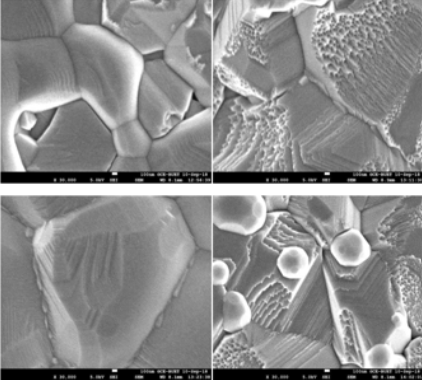
The study of MAX phases has become an important sub-branch in materials science and technology due to their interesting properties and various studies since their discovery during 1960s. MAX phases, where M is an early transition metal, A is a group IIIA or IVA element, and X is either C or N, attract more and more attention due to their unusual properties associated metals and ceramics. Like metals, they are electrically and thermally conductive, not susceptible to thermal shock, plastic at high temperature and exceptionally damage tolerant, and most readily machinable. Like ceramics, they are elastically rigid, lightweight, creep and fatigue resistant and maintain their strengths to high temperatures. This makes them attractive for many applications such as structural materials at elevated temperature. We have studied materials properties such as structural, electrical, optical, thermodynamical etc using the density functional theory (DFT) as implemented in the CASTEP code. Highly motivated students are most welcome to our group for M.Sc./M.Phil./PhD research in the Computational Materials Science group.
Selected publications
| # | Title | Authors | Journal | Year | DOI |
|---|---|---|---|---|---|
| 1 | Prediction of Superconductivity in Janus HfNbCClF MXene: Stability and Physical Properties | M. M. Uddin et al. | RSC Nanoscale | 2026 | — |
| 2 | Surface-Modified M2C (M = V, Nb, Cr) and Ti3C2 MXenes for High-Performance Electromagnetic Absorption, Minimum Reflection Loss and Shielding in L-, S-, and C-Bands | M. M. Uddin et al. | Journal of Electronic Materials | 2026 | — |
| 3 | First-Principles Study of Symmetric Y2CCl2 and Janus Y2CClX (X = F, Br, I) MXenes for Underwater Solar Energy Harvesting | M. M. Uddin et al. | International Journal of Energy Research | 2026 | — |
| 4 | From Y2CCl2 MXene to Janus MXenes Y2CClX (X = F, Br, I): Built-in Electric Field and Tunable Electronic and Optoelectronic Properties for Enhanced Photovoltaic Applications | M. M. Uddin et al. | Scientific Reports | 2026 | DOI ↗ |